The Future of Interactive, Standards-Compliant eBooks
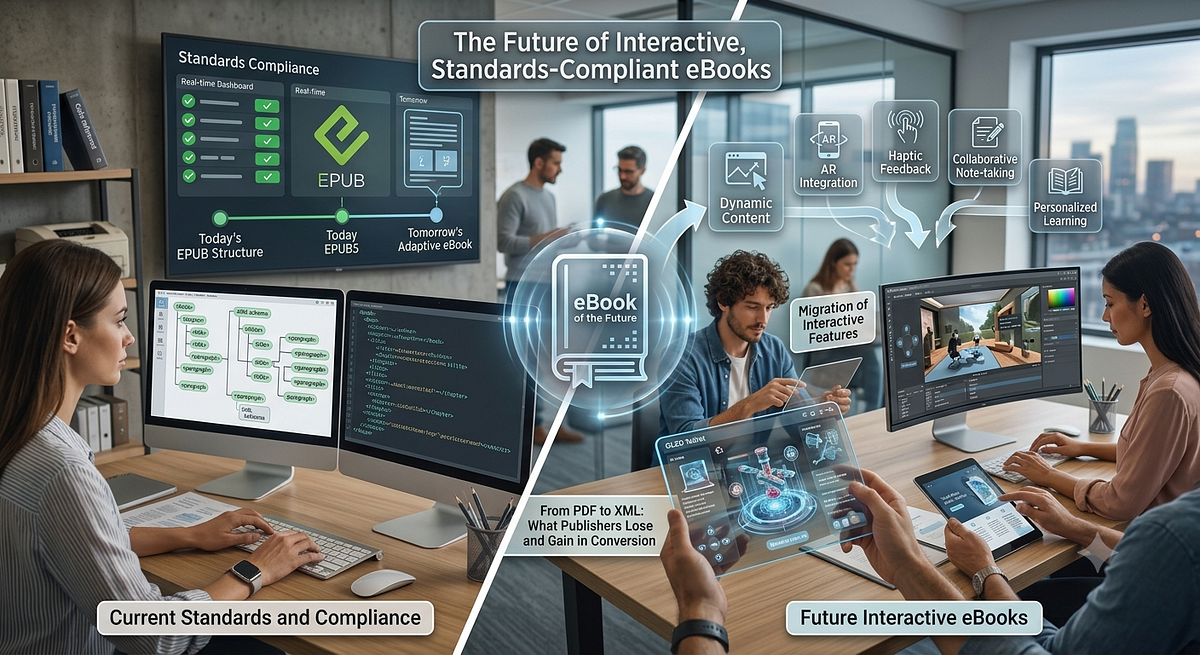
The eBook industry is moving beyond static pages. Today’s readers expect content that is accessible, interactive, and optimised for multiple devices and learning environments. For publishers, the challenge is no longer just digitisation it is creating standards-compliant eBooks that deliver richer experiences while meeting evolving global regulations.
As educational institutions, STM publishers, and digital learning platforms embrace immersive content, interactive eBooks are becoming the foundation of modern publishing.
What Defines an Interactive eBook?
Interactive eBooks combine traditional text with dynamic elements that improve engagement and usability. Modern EPUB 3 publications can support:
- Audio and video integration.
- Interactive assessments and quizzes.
- Animations and simulations.
- Responsive layouts for multiple screen sizes.
- Hyperlinked references and navigation.
- Read-aloud and assistive technology compatibility.
Unlike conventional PDFs, interactive eBooks adapt seamlessly across smartphones, tablets, e-readers, and desktop platforms.
Explore Wordium’s /ebook-conversion-services and /digital-conversion-solutions to understand how advanced publishing workflows support multi-format delivery.
Why Standards Compliance Matters
Interactivity alone is not enough. Publishers must also ensure compliance with industry standards such as:
- EPUB 3 specifications.
- WCAG accessibility guidelines.
- EPUB Accessibility 1.1 requirements.
- European Accessibility Act (EAA) regulations.
- Semantic HTML5 and structured XML frameworks.
Standards-compliant eBooks improve discoverability, accessibility, and long-term content sustainability. They also ensure that users with visual, auditory, or cognitive disabilities can access digital publications without barriers.
Publishers investing in accessibility today are preparing for the future of digital learning and global distribution.
Learn more about Wordium’s /accessibility-services and /xml-conversion-services.
The Next Phase of Digital Publishing
The future of eBooks lies in intelligent, reusable content. AI-powered workflows, XML-first production models, and automated quality checks are enabling publishers to create once and publish everywhere.
For STM, academic, and educational publishers, interactive eBooks are no longer a premium offering; they are becoming an industry expectation.
Looking to build scalable, standards-compliant digital publications? Explore Wordium’s /typesetting-services and /editorial-services, or visit /contact-us to discuss your publishing goals.


Comments
Post a Comment